



When choosing between linen and microfiber, one must consider texture, comfort, and sustainability. Linen offers natural breathability and an earthy charm, ideal for warm climates and casual styles. Conversely, microfiber is soft, durable, and easy to maintain, making it perfect for busy households and contemporary aesthetics. Budget and environmental preferences likewise play a role in the decision. Exploring both fabrics can help clarify which one suits personal needs best, revealing more insights ahead.
Article Highlights
- Choose linen for its natural breathability and rustic aesthetic, ideal for casual summer clothing and home decor.
- Opt for microfiber for a soft, modern feel, perfect for activewear and cleaning products due to its durability and affordability.
- Consider linen if sustainability is a priority, as it is biodegradable and requires less water in production compared to microfiber.
- Select microfiber for low maintenance needs; it's machine washable, quick drying, and wrinkle-resistant, making it convenient for busy lifestyles.
- Evaluate your budget: linen typically costs more due to its natural fibers, while microfiber offers a more budget-friendly option.
Overview of Linen and Microfiber
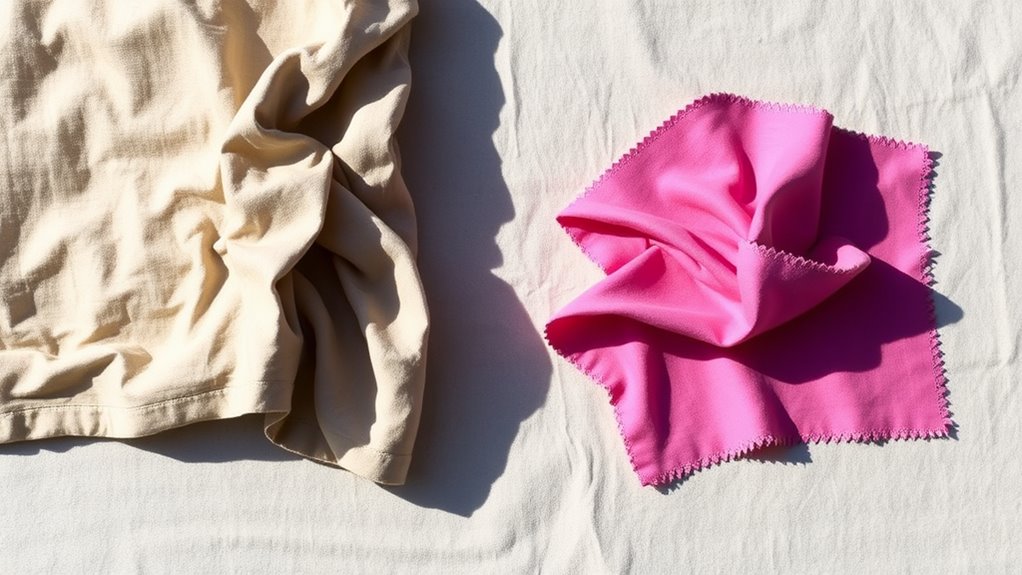
When comparing linen and microfiber, it is essential to understand their distinct characteristics. Linen, made from flax fibers, boasts natural breathability and moisture-wicking properties, making it ideal for warm climates. Its texture is typically coarse, offering a rustic, earthy feel. Conversely, microfiber is a synthetic blend, often made from polyester or nylon, which provides a softer, smoother touch. This fabric's properties include being lightweight, durable, and resistant to stains and wrinkles. In contrast to linen, which brings a classic elegance to any space, microfiber's easy maintenance and affordability appeal to many. Both fabrics have unique texture differences that cater to different preferences, ensuring there's an option for everyone when choosing between them.
Aesthetics and Style
The choice between linen and microfiber often reflects personal taste and the desired aesthetic of a space. Linen exudes a natural, rustic charm, whereas microfiber offers a sleek, modern appeal. When considering these fabrics, individuals often think about:
- Color options: Linen comes in soft earthy tones, whereas microfiber boasts lively, bold hues.
- Texture variations: Linen has a textured, slightly rough feel, adding depth; microfiber is smooth and soft, creating a polished look.
- Patterns: Linen frequently features subtle patterns, enhancing its organic feel, whereas microfiber can showcase dynamic prints.
- Versatility: Linen suits casual environments, whereas microfiber fits contemporary settings.
Ultimately, the choice hinges on personal style preferences and how each fabric complements the overall decor.
Breathability and Comfort
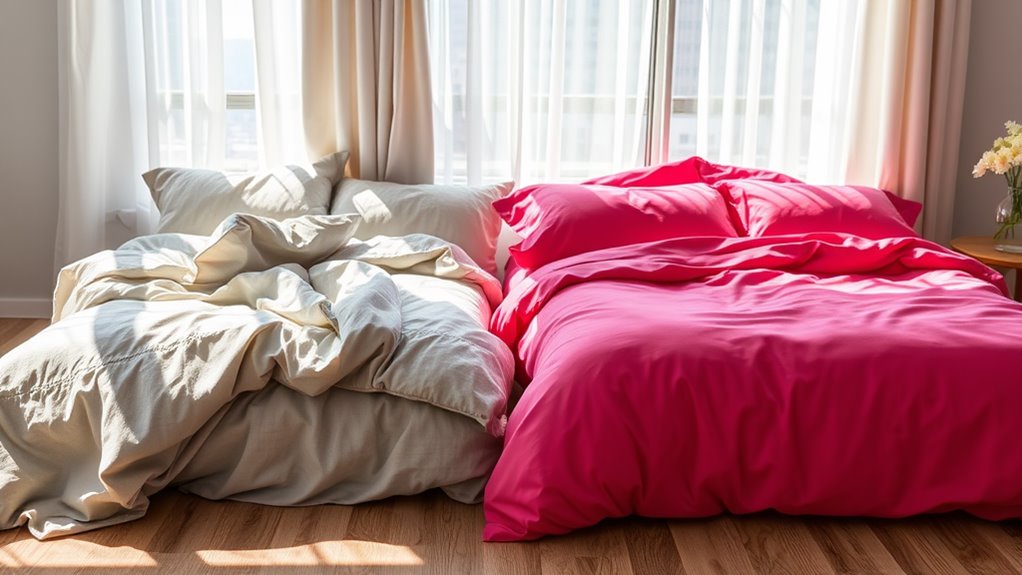
As far as breathability and comfort are concerned, linen stands out for its natural ability to allow air circulation, making it a popular choice in warmer climates. Conversely, microfiber offers impressive moisture-wicking properties, keeping users dry and comfortable during various activities. Each fabric presents unique benefits, catering to different preferences and needs.
Linen's Natural Breathability
Linen's natural breathability sets it apart as a preferred fabric for warm weather. Its unique properties offer several benefits that improve comfort, especially for those with skin sensitivity. Here are four reasons why linen shines in breathability:
- Natural Cooling: The fabric allows air to circulate, keeping the body cool.
- Moisture Absorption: Linen absorbs sweat without feeling damp, promoting comfort.
- Quick Drying: It dries quickly, ensuring the fabric remains light and airy.
- Soft Texture: The fibers become softer with each wash, providing a gentle feel against the skin.
These features make linen an outstanding choice for individuals looking for comfort and breathability, particularly in warm climates where staying cool is vital.
Microfiber's Moisture Wicking
Even though linen surpasses in breathability, microfiber offers impressive moisture-wicking properties that boost comfort during physical activities. This synthetic fabric shines in moisture absorption, drawing sweat away from the body and keeping the skin dry. As a result, it helps maintain temperature regulation, which is essential for anyone engaging in exercise or outdoor activities. Microfiber's lightweight and soft texture further improves its appeal, providing a comfortable feel against the skin. Unlike traditional fabrics, microfiber dries quickly, preventing the discomfort of damp clothing. This quick-drying ability makes it an outstanding choice for those seeking functionality without sacrificing comfort. Overall, microfiber can be a practical alternative for those prioritizing moisture management during their physical endeavors.
Durability and Longevity
When comparing linen and microfiber, their fabric compositions play an essential role in determining durability and longevity. Each material has unique care and maintenance requirements that impact its lifespan, in addition to varying levels of resistance to wear and tear. Comprehending these differences helps consumers make informed choices about which fabric best suits their needs.
Fabric Composition Differences
The differences in fabric composition between linen and microfiber greatly impact their durability and longevity. Linen, derived from the flax plant, boasts strong fiber types that naturally resist wear and tear. Its material properties include:
- Breathability: Allows air circulation, reducing moisture buildup.
- Strength: Depending on its weave, linen can be exceptionally strong.
- Natural Resilience: It ages beautifully and develops a unique character over time.
- Hypoallergenic: Ideal for sensitive skin, minimizing irritation.
On the other hand, microfiber, made from synthetic fibers, offers a soft touch but may not match linen's robustness. Its durability can vary based on the quality of the synthetic fibers used, making it crucial to evaluate these aspects when choosing between the two fabrics.
Care and Maintenance
Though both linen and microfiber have their unique qualities, their care and maintenance requirements differ greatly, impacting their durability and longevity. Linen typically needs gentle washing techniques, often requiring cold water and air drying to prevent shrinkage. Conversely, microfiber is more resilient, allowing for machine washing and quick drying.
Effective fabric storage is crucial for both materials; linen should be stored in a cool, dry place to avoid mildew, whereas microfiber can be folded or hung without worry.
Here's a quick comparison:
| Material | Washing Techniques |
|---|---|
| Linen | Cold water, air dry |
| Microfiber | Machine wash, quick dry |
| Material | Fabric Storage |
| Linen | Cool, dry place |
| Microfiber | Fold or hang freely |
Wear and Tear Resistance
Linen and microfiber exhibit distinct levels of wear and tear resistance that considerably influence their durability and longevity. When comparing the two, it's crucial to evaluate the following factors:
- Wear Resistance: Linen fibers are strong and can withstand heavy use, making them ideal for long-lasting items.
- Tear Resistance: Microfiber, although soft, can be prone to fraying over time, especially with repeated washing.
- Maintenance: Linen requires more care to maintain its integrity, whereas microfiber is easier to wash and dry.
- Cost-Effectiveness: Though linen may have a higher upfront cost, its durability can lead to savings in the long run.
Ultimately, the choice between linen and microfiber hinges on personal preferences and the intended use of the fabric.
Maintenance and Care
With regard to maintenance and care, microfiber typically requires less effort than linen. Microfiber can often be machine washed with cold water and tumble dried on low. It dries quickly and resists wrinkles, making it a convenient choice for busy households. Moreover, it's less prone to staining, so basic laundry tips like addressing spills without delay can keep it looking fresh.
On the other hand, linen needs a bit more attention. It's best washed in cold water, but air drying is recommended to maintain its texture. Linen likewise tends to wrinkle easily, requiring regular ironing for a polished look. Overall, although both fabrics have their care requirements, microfiber stands out for its ease and low-maintenance qualities.
Environmental Impact

Though both microfiber and linen have their own environmental considerations, microfiber often raises concerns due to its synthetic origins. It's derived from petroleum-based materials, leading to pollution and waste. Conversely, linen is celebrated for its eco-friendly practices and sustainable sourcing. Here are four factors to contemplate:
- Biodegradability: Linen decomposes naturally, whereas microfiber can persist in landfills.
- Water Usage: Linen requires less water during production compared to microfiber's intensive processes.
- Chemicals: Linen production typically uses fewer harmful chemicals.
- Durability: Linen's longevity means reduced waste over time.
For environmentally conscious consumers, linen often emerges as the more sustainable choice, aligning better with eco-friendly practices.
Cost Comparison
With regard to cost, many consumers find that linen and microfiber offer distinct price points that can influence their purchasing decisions. Linen typically falls within a higher price range owing to its natural fibers and the labor-intensive processes involved in its production. This can be a significant factor for those with tight budget considerations. Conversely, microfiber is often more affordable, making it an attractive option for budget-conscious shoppers. Its synthetic nature allows for mass production, resulting in lower costs. In the end, the choice between the two fabrics often comes down to individual financial circumstances, with each fabric presenting unique benefits that may justify the investment depending on the consumer's needs.
Best Uses for Each Fabric
In the context of selecting the right fabric for specific applications, comprehending the strengths of linen and microfiber can make all the difference. Each fabric boasts unique characteristics that lend themselves to various uses, illustrating their fabric versatility.
- Linen: Best for casual summer clothing because of its breathability.
- Linen: Ideal for tablecloths and napkins, offering a sophisticated, natural look.
- Microfiber: Excellent for cleaning cloths, as it traps dust and dirt effectively.
- Microfiber: Great for activewear, providing moisture-wicking properties.
Understanding these best applications helps consumers choose the right fabric for their needs, ensuring satisfaction and performance in everyday life.
Frequently Asked Questions
Can Linen and Microfiber Be Mixed in Home Decor?
In a sunlit room, soft linen curtains billow gently beside sleek microfiber cushions, creating a harmonious blend of textures. Mixing linen and microfiber in home decor isn't just possible; it can be stunning. The natural, breathable quality of linen complements the durability and lively colors of microfiber. Together, they create decorative accents that enhance any space. Fabric blends like these add depth and interest, making a home feel inviting and effortlessly stylish.
How Do I Choose Between Linen and Microfiber for Bedding?
When choosing between linen and microfiber for bedding, it's crucial to take into account bedding comfort and fabric durability. Linen's breathable nature offers excellent comfort, especially in warmer climates, whereas its durability makes it a long-lasting option. Conversely, microfiber provides a soft, cozy feel and is often more resistant to stains and wear. In the end, it depends on personal preference and specific needs, as both fabrics have unique benefits that cater to different lifestyles.
Is One Fabric Hypoallergenic Compared to the Other?
As far as hypoallergenic properties and fabric breathability are concerned, some differences emerge. Linen's natural fibers resist allergens and moisture, making it a great choice for sensitive skin. Microfiber, conversely, is tightly woven, which can trap dust and allergens, potentially causing irritation. During both fabrics have their merits, those prioritizing hypoallergenic qualities might lean in the direction of linen for its breathability and ability to repel common allergens.
What Are the Color Options for Linen Versus Microfiber?
When considering color options, both linen and microfiber offer a range of choices. Linen typically boasts earthy, muted tones that align with current color trends, whereas microfiber comes in lively, bold colors owing to its synthetic nature. Nevertheless, regarding fabric durability, linen tends to be more resilient against wear over time, making it a popular choice for those seeking longevity. In the end, one's preference for color may influence their fabric selection.
Do Either Fabrics Repel Pet Hair Better Than the Other?
In terms of pet hair resistance, it's a toss-up. Linen tends to attract less hair because of its natural texture, making fabric maintenance a bit easier for pet owners. Conversely, microfiber can cling to hair, requiring more frequent cleaning. Although both fabrics have their merits, those with furry friends might find linen a more suitable choice for keeping their space tidy and reducing the hassle of constant upkeep.