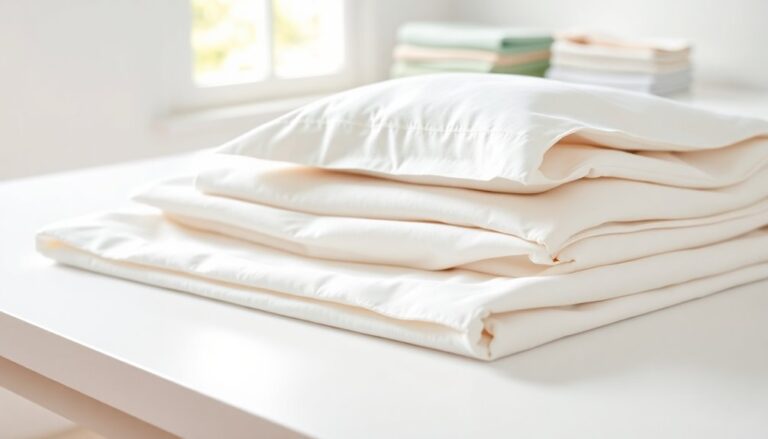





An effective linen closet organization guide starts with evaluating the space. Measuring dimensions and analyzing layouts helps determine how best to organize. Next, sorting and decluttering linens by type allows for efficient management. Choosing the right storage solutions, like clear bins and labeled baskets, promotes easy access. Establishing a maintenance routine guarantees longevity. By implementing these strategies, one can transform a cluttered closet into an organized haven. There's more to explore on maximizing vertical space and keeping things tidy.
Article Highlights
- Measure your linen closet dimensions to understand available space and layout for optimal organization.
- Sort linens by type and evaluate which items to keep, toss, or donate for a clutter-free environment.
- Choose functional storage solutions like bins and baskets, labeling them for easy access and organization.
- Utilize clear containers and color coordination to enhance visibility and streamline categorization of linens.
- Establish a routine maintenance schedule to regularly assess and refresh the contents of your linen closet.
Assessing Your Linen Closet Space

How much space do you really have in your linen closet? To optimize its functionality, it's vital to conduct a thorough space evaluation. First, measure the closet dimensions, including height, width, and depth. This'll provide a clear picture of available space. Next, consider the layout—are there shelves, or is it just a single rod? A comprehension of the closet's structure helps in planning how to best utilize the area. By identifying the actual space, one can decide what linens and supplies are fundamental and how they might fit. This assessment lays the groundwork for an organized linen closet, ensuring everything has its place and is easily accessible when needed.
Sorting and Decluttering Your Linens
To kick off the sorting and decluttering process, grab all your linens and lay them out in a designated space. This makes it easier to assess what you have. Start by identifying different linen types, such as towels, sheets, and tablecloths.
Next, decide what to keep, toss, or donate. If items are worn or no longer needed, consider donation options like local shelters or charities.
Here's a simple table to help you categorize your linens:
| Linen Type | Keep | Donate |
|---|---|---|
| Towels | Yes | Worn or torn |
| Bed Sheets | Yes | Old or mismatched |
| Tablecloths | Yes | Stained |
| Pillowcases | Yes | Faded |
Choosing the Right Storage Solutions

During the exploration of storage solutions for your linens, it is essential to take into account both functionality and accessibility. Selecting the right storage materials can greatly improve the organization and usability of your linen closet. Options like sturdy shelves, clear containers, and fabric bins provide different benefits, ensuring linens are easy to access as they remain protected. Furthermore, aesthetic choices shouldn't be overlooked. Coordinating colors and styles can create a visually pleasing environment, making the closet feel more inviting. By balancing practicality with design, anyone can create a linen closet that serves its purpose and complements the overall home decor. Thoughtful storage solutions can transform a cluttered space into a serene, organized area.
Utilizing Bins and Baskets for Organization
When organizing a linen closet, selecting the right bins and baskets can greatly improve storage efficiency. These containers not only assist in grouping similar items together but additionally make it easier to find what's needed at a glance. Labeling each bin guarantees quick access, preventing the frustration of rummaging through clutter.
Choosing the Right Bins
Selecting the right bins can make all the difference in a well-organized linen closet. When choosing bins, it's crucial to contemplate bin materials that suit the closet's environment. For instance, breathable fabric bins are perfect for storing linens, whereas plastic bins offer durability and easy cleaning. Color coordination additionally plays an important role; using bins in complementary shades not just improves aesthetics but helps categorize items effortlessly. For instance, soft pastels can signify bathroom textiles, whereas bold colors can represent kitchen linens. By thoughtfully selecting bin materials and coordinating colors, individuals can create a visually appealing and functional space, ensuring that each item has its designated spot and is easily accessible when needed.
Labeling for Easy Access
Effective labeling can transform a cluttered linen closet into a streamlined space, making it easy to find what you need. By utilizing various label types, such as printed, handwritten, or adhesive labels, individuals can create an organized system that works for them. Color coding adds another layer of efficiency; for instance, using blue labels for towels and green for bed linens helps quickly identify items at a glance. Bins and baskets can be labeled accordingly, ensuring everything has its place. This method not merely improves accessibility but also encourages maintaining organization. With consistent labeling practices, a linen closet can remain tidy, reducing stress when searching for crucial items. A little effort in labeling goes a long way toward a functional space.
Labeling for Easy Identification

A well-organized linen closet can greatly benefit from clear labeling to guarantee easy identification of items. Using various label types, such as adhesive, removable, or hanging tags, can improve the organization process. Each label type serves a unique purpose depending on the intended use and frequency of access. For instance, adhesive labels work well for permanent storage, whereas removable labels are perfect for items that may change location.
Choosing the right label materials is likewise significant. Waterproof or fabric labels are ideal for items that may come into contact with moisture, whereas paper labels are suitable for dry environments. By selecting appropriate label types and materials, anyone can create an efficient system that simplifies finding linens and other supplies.
Creating a Maintenance Routine
Though organizing a linen closet can feel like a challenging task, establishing a maintenance routine can make it manageable and efficient. By creating a maintenance schedule, individuals can keep their closet organized and clutter-free. It's helpful to decide on a cleaning frequency that suits their lifestyle—monthly or quarterly checks often work well. During these maintenance sessions, they should take time to assess stock levels, remove any items that are damaged or no longer needed, and reorganize as necessary. Furthermore, replacing items like sheets or towels that have worn out guarantees the closet remains functional. A consistent routine not only preserves the organization but also promotes a more enjoyable experience when accessing linens.
Tips for Maximizing Vertical Space
Maximizing vertical space in a linen closet can greatly improve its functionality, allowing for better organization without taking up additional floor area. One effective strategy is to use shelf risers, which create extra layers for folded towels or linens. This not merely increases visibility but also helps in utilizing every inch of available space.
Additionally, wall hooks can be installed for hanging items like bathrobes or cleaning supplies, keeping them accessible yet out of the way.
Here's a quick comparison of options for vertical storage:
| Storage Solution | Benefits |
|---|---|
| Shelf Risers | Increases shelf space |
| Wall Hooks | Frees up shelf space |
Implementing these tips can make a linen closet more efficient and organized.
Frequently Asked Questions
How Often Should I Wash My Linens?
In terms of linen care, one could say that keeping things fresh is a delightful endeavor. Most experts suggest a washing frequency of once a week for sheets and every two weeks for towels, ensuring a cozy, clean environment. Nevertheless, if someone's particularly active or has allergies, they might want to wash more often. In the end, it's about finding the right balance that suits one's lifestyle during promoting a healthy home.
What Materials Are Best for Linen Storage?
When considering linen storage, it's essential to choose the right materials. Cotton and muslin fabric types are ideal, as they promote air circulation and prevent moisture buildup, which can lead to mildew. Storage containers made from breathable materials, like fabric bins or wicker baskets, are likewise recommended. These options help keep linens fresh and organized, ensuring they remain in good condition for longer periods. Proper choices make all the difference in maintaining quality linens.
Can I Store Linens in Damp Areas?
"An ounce of prevention is worth a pound of cure." Storing linens in damp areas isn't advisable, as excess moisture can lead to mold and mildew growth. To guarantee proper moisture control, it's essential to choose appropriate storage solutions. Instead of damp spaces, opt for dry, well-ventilated areas. If linens must be stored in humid conditions, using moisture-absorbing packets can help protect them from damage over time.
How Do I Prevent Linen From Smelling Musty?
To prevent linen from smelling musty, one should guarantee regular airing of the fabrics. Keeping linens in a well-ventilated area can help eliminate moisture, which often causes musty odors. Furthermore, using breathable storage bags or containers can protect linens from dampness. Washing linens frequently and allowing them to dry completely before storing them will likewise minimize the risk of developing unpleasant smells. With these simple steps, one can maintain fresh-smelling linens.
What Is the Best Way to Fold Linens?
In regard to folding linens, there are several effective folding techniques that can help maintain their shape and save space. For larger items like sheets and blankets, it's best to lay them flat, folding them in thirds lengthwise, then in half. Smaller items like hand towels can be folded into rectangles, ensuring they're neat and easy to stack. Comprehending linen sizes is essential, as it influences how each piece should be folded for ideal organization.