



Caring for linen clothing involves gentle handling to preserve its charm. Garments should be pre-soaked in cold water and washed in cool to lukewarm settings using a mild detergent. It's best to air dry away from direct sunlight or tumble dry on low heat but remove them slightly damp to minimize wrinkles. Ironing during dampness with medium to high heat keeps the fabric crisp. Proper storage and maintenance techniques help guarantee linen's durability and allure, inviting further exploration of care methods.
Article Highlights
- Pre-soak linen garments in cold water to loosen dirt before washing.
- Wash in cool to lukewarm water using a gentle cycle and mild detergent.
- Air dry away from direct sunlight or tumble dry on low to prevent shrinkage.
- Iron while slightly damp with medium to high heat for best results.
- Store folded in a cool, dry place to maintain fabric quality and prevent stretching.
Understanding Linen Fabric
Linen fabric, known for its breathability and durability, has been cherished for centuries. Dating back to ancient civilizations, linen's history reveals its use in clothing, home textiles, and even mummification in Egypt. The benefits of linen are numerous; it's hypoallergenic, making it ideal for sensitive skin, and it absorbs moisture without feeling damp. This natural fiber additionally has a unique ability to keep the body cool in hot weather and warm in cooler conditions, making it versatile for various climates. Furthermore, linen's strength means it can withstand frequent washing and wear, giving it longevity. As people seek sustainable and comfortable clothing options, comprehending linen's rich history and its many benefits can help them appreciate this exceptional fabric even further.
Washing Your Linen Garments
Caring for linen garments begins with comprehending the best washing practices to maintain their quality and longevity. Before washing, it's advisable to pre soak garments in cold water to loosen any dirt or stains, guaranteeing a more effective clean. In terms of washing temperatures, linen thrives in cool to lukewarm water, ideally between 30°C to 40°C (86°F to 104°F). Using a gentle cycle helps preserve the fabric's natural fibers, preventing damage. Moreover, opting for mild detergents will protect the linen's texture and color. Avoid using bleach, as it can weaken the fibers. Following these guidelines will help guarantee that linen garments remain beautiful and wearable for years to come, keeping their charm intact through proper care.
Drying Techniques for Linen
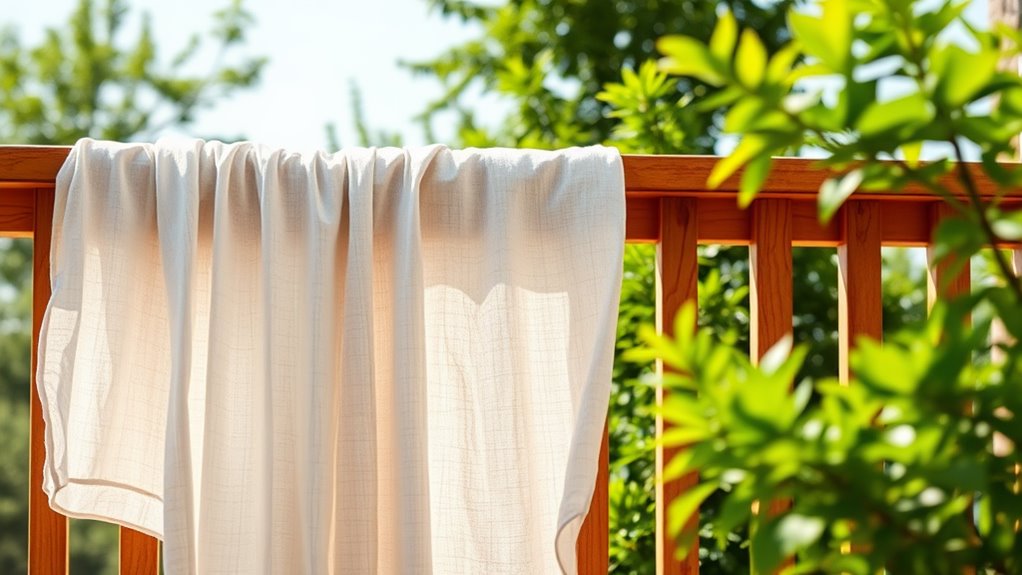
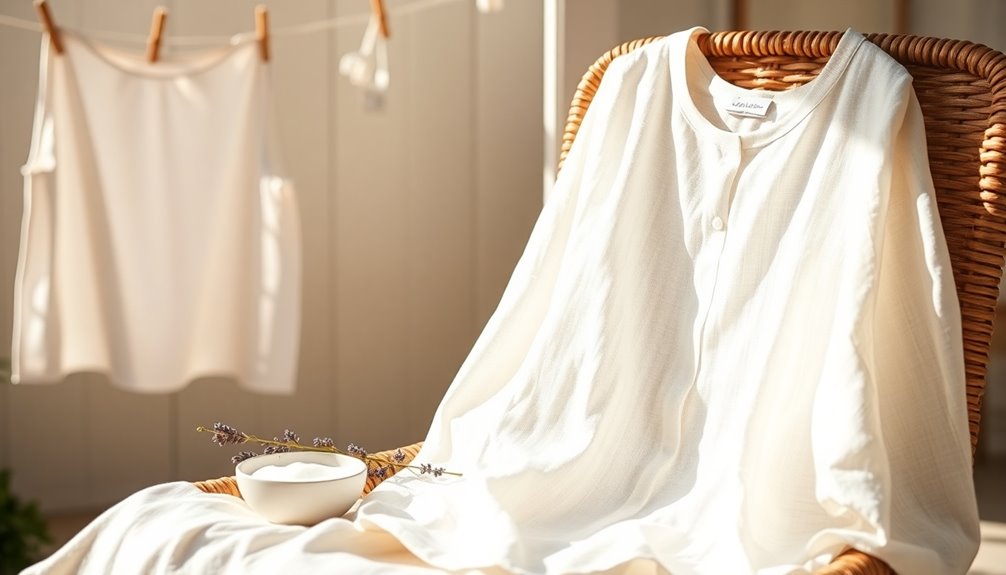
Regarding drying linen, using the right techniques can greatly improve the fabric's lifespan and appearance. Linen can be quite delicate, so care must be taken during the drying process. Many experts recommend air drying as the best option to preserve its quality. Nevertheless, if time is of the essence, tumble drying on a low heat setting can be an alternative.
Here are some effective drying techniques for linen:
- Air Drying: Hang garments on a clothesline or drying rack away from direct sunlight.
- Tumble Drying: Use a low heat setting to prevent shrinkage.
- Avoid Over-Drying: Remove linen while it's slightly damp to reduce wrinkles.
- Flat Drying: For heavier items, lay them flat on a clean surface to maintain shape.
Ironing and Storing Linen Clothing
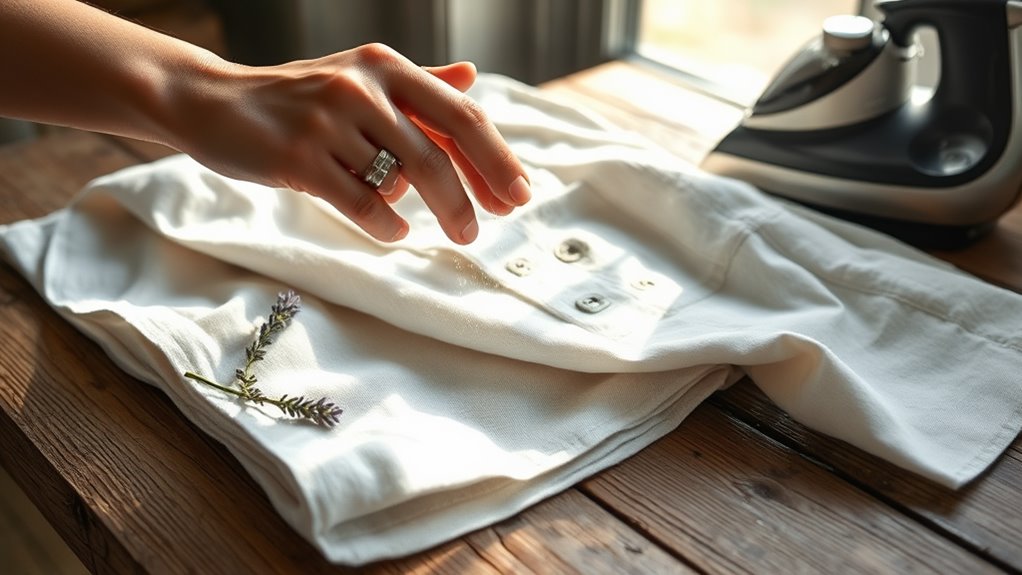
Proper drying techniques set the stage for the next steps in maintaining linen's beauty. Once dry, it's time to address ironing and storage. For ironing, it's crucial to use the right ironing techniques. Linen should be pressed during slightly damp to prevent scorching and achieve a crisp finish. A medium to high heat setting works best, and using steam can help remove stubborn wrinkles.
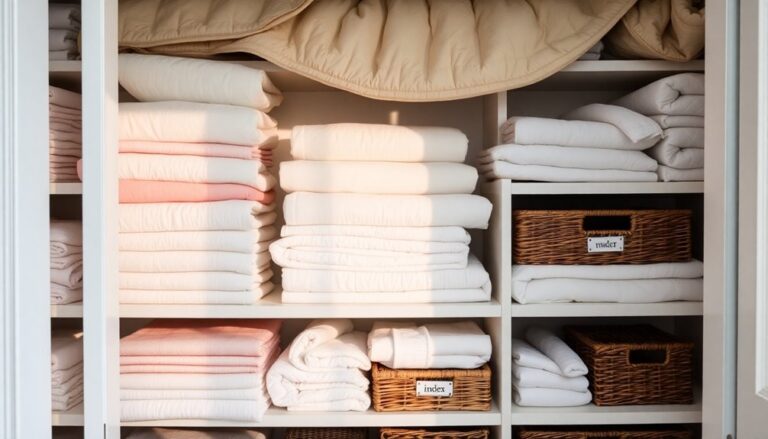
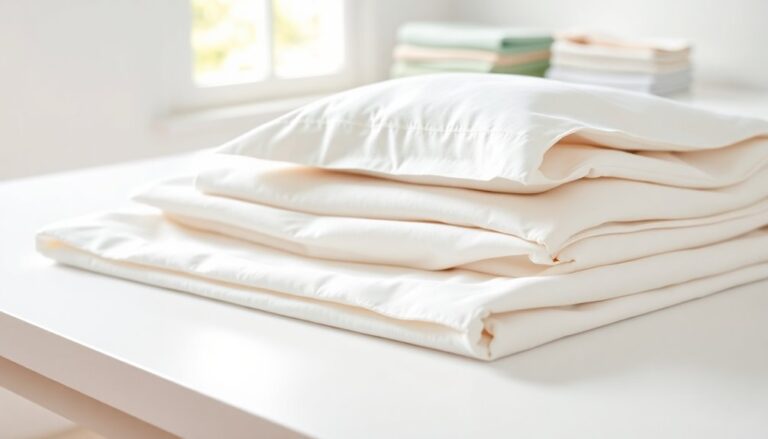
When it comes to storage solutions, linen clothing should be kept in a cool, dry place. Avoid hanging to prevent stretching; instead, fold items neatly. Cotton or muslin bags can protect linen from dust while allowing it to breathe. Following these steps will guarantee your linen stays beautiful and ready to wear when needed.
Tips for Maintaining Linen's Quality
Even though linen's natural fibers offer a timeless appeal, maintaining its quality requires mindful care. To guarantee the fabric remains durable and retains its charm, individuals should adhere to these crucial tips:
- Wash linen garments in cold water to preserve color and structure.
- Avoid using bleach, as it can weaken linen fibers over time.
- Air dry whenever possible, as high heat can lead to shrinkage.
- Store linen in a cool, dry place, away from direct sunlight to prevent fading.
Frequently Asked Questions
Can Linen Clothing Shrink After Washing?
Linen clothing can definitely shrink after washing, and it's important to know some shrink prevention tips. To avoid this issue, one should always use gentle washing techniques, like cold water and a delicate cycle. Furthermore, air drying is preferred over machine drying, as heat can exacerbate shrinkage. By following these practices, individuals can enjoy their linen garments without worrying about unwanted size changes, ensuring their wardrobe remains stylish and comfortable.
Is Linen Hypoallergenic for Sensitive Skin?
Linen's often considered a great option for those with sensitive skin because of its hypoallergenic properties. It's breathable and moisture-wicking, which helps reduce irritation, making it ideal for anyone prone to skin issues. The linen skin benefits include its natural ability to prevent irritation, keeping the skin comfortable. Many find that wearing linen helps them avoid rashes or discomfort, ensuring they can enjoy their clothing without worry.
How Does Linen Compare to Cotton in Durability?
In terms of durability, linen's as tough as a superhero in the fabric world. Compared to cotton, linen properties shine with superior strength, making it less likely to tear or fray over time. During cotton may wear out faster, linen maintenance includes gentle washing and air drying, which helps preserve its remarkable durability. In the end, those who appreciate lasting quality will find linen to be a resilient choice in their wardrobe.
Can I Wear Linen in Winter?
Linen's versatility makes it suitable for winter styling, especially when employing layering techniques. As it's often seen as a warm-weather fabric, combining linen pieces with heavier materials, like wool or flannel, allows for comfortable winter outfits. It's breathable, so it can help regulate body temperature. When styled correctly, linen can add a unique texture to winter wardrobes, proving that it's a fabric that can be enjoyed year-round, not just in the warmer months.
What Are the Environmental Benefits of Linen?
Linen's like nature's little gift, offering numerous environmental benefits. It's derived from the flax plant, which requires minimal water and pesticides, showcasing sustainable sourcing. As a biodegradable fabric, linen decomposes naturally, reducing landfill waste and pollution. Moreover, its durability means fewer replacements, promoting a more sustainable lifestyle. By choosing linen, folks not only enjoy a timeless style but likewise contribute positively to the planet, making a conscious choice for a greener future.