



To make linen bedding last longer, it's vital to wash it gently in cold water with a mild detergent and avoid bleach. Over-drying can damage the fibers, so using low temperatures or air drying is best. Proper storage in a cool, dry place with breathable bags helps prevent mildew. Regularly rotating linens guarantees even wear, and addressing stains quickly is important for preservation. There are many more tips that can keep linen bedding looking beautiful and durable.
Article Highlights
- Wash linen bedding in cold water using a gentle cycle and mild detergent to minimize wear and maintain fabric quality.
- Avoid over-drying by using low temperatures and checking frequently; consider air drying for gentler moisture removal.
- Store linens in a cool, dry place using breathable cotton bags to prevent moisture buildup and mildew.
- Rotate your linen bedding regularly to ensure even wear, allowing each set adequate time to rest between uses.
- Treat stains promptly with appropriate methods, like blotting with cold water or using a mild detergent, to preserve fabric integrity.
Wash Your Linen Bedding With Care
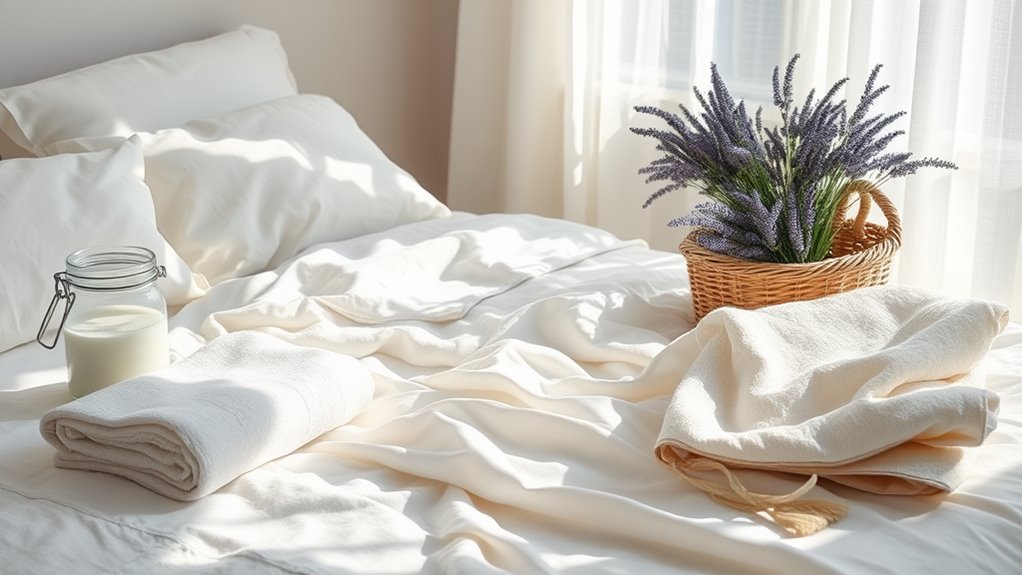
In relation to washing linen bedding, it's vital to treat it with care, as the right approach can greatly extend its lifespan. Using a gentle cycle is fundamental; it minimizes the wear and tear that can occur during washing. Linen is a delicate fabric, and harsh agitation can lead to fraying and fading. Moreover, washing in cold water helps preserve the fibers, preventing shrinkage and maintaining the bedding's natural texture. It's important to avoid bleach or fabric softeners, which can damage the linen. Instead, opt for a mild detergent that cleans without compromising quality. By following these simple guidelines, one can guarantee their linen bedding remains soft, durable, and beautiful for years to come, enhancing the overall sleeping experience.
Avoid Over-Drying Your Linen
Even though it might be tempting to leave linen bedding in the dryer until it's completely dry, doing so can lead to unwanted consequences. Over-drying can strip away the natural fibers, causing the fabric to become rough and less breathable. Proper moisture control is crucial for maintaining the softness and durability of linen. Instead of relying solely on high heat, individuals should consider using lower drying temperatures and checking the bedding frequently. Employing gentle drying techniques, like air drying or tumble drying on a low setting, can help preserve the material's integrity. By avoiding over-drying, linen bedding can retain its inherent qualities, ensuring a comfortable night's sleep for years to come.
Store Your Linen Properly
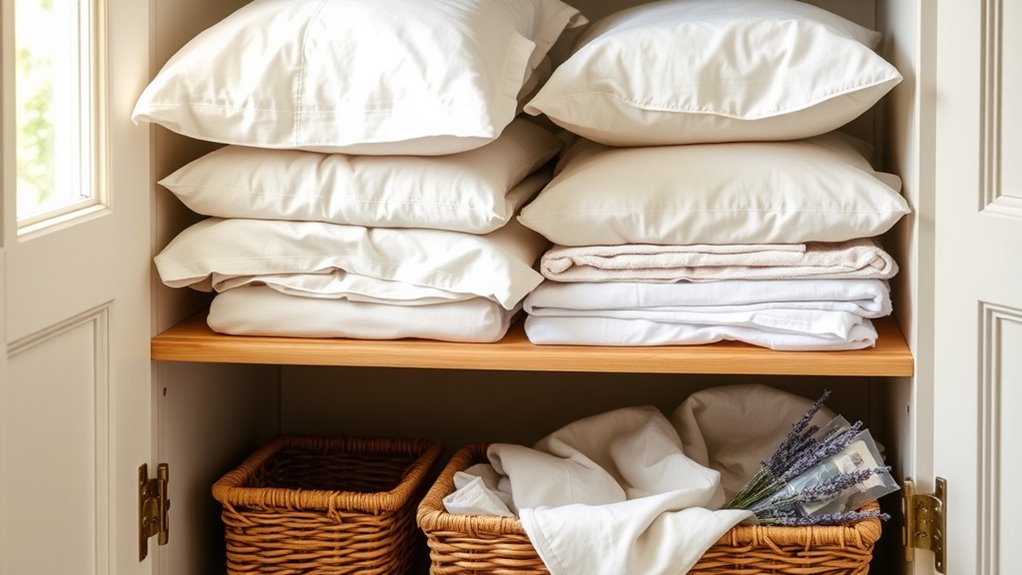
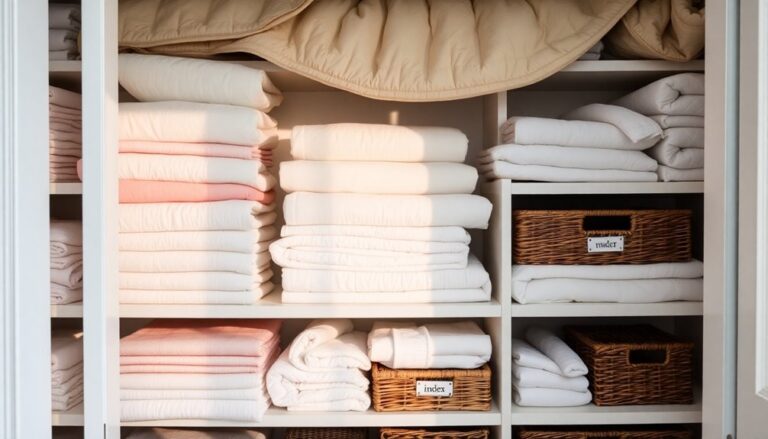
Proper storage is vital for maintaining the quality of linen bedding. When not in use, it's important to store linen in a cool, dry place to prevent moisture buildup. Humidity control is key; damp conditions can lead to mildew and damage the fibers. Using breathable cotton storage bags or bins helps protect the bedding from dust and pests during air circulation. Avoid plastic containers, as they can trap moisture and harm the linen. Furthermore, verify that the linens are completely dry before putting them away. By following these simple steps for proper storage, individuals can keep their linen bedding in excellent condition, confirming it lasts for years to come as it remains fresh and inviting for each use.
Rotate Your Linen Bedding Regularly
Regularly rotating linen bedding is essential for prolonging its lifespan and maintaining comfort. Many people don't realize that consistent use of the same sheets can lead to uneven wear and tear. By practicing linen rotation, individuals can guarantee that each set of bedding is used equally, distributing any stress evenly across all pieces. This simple yet effective bedding maintenance technique not just keeps the fabric looking fresh but also improves its durability. Ideally, one should aim to switch out linens every few weeks, allowing each set to rest and recover. This approach not just helps maintain the integrity of the fibers but also provides a cozy sleeping environment. In the end, linen rotation is a key strategy for preserving the quality of beloved bedding.
Address Stains Promptly and Effectively

Stains can swiftly turn a beautiful set of linen bedding into an eyesore, so addressing them without delay is crucial. Quick stain removal not only preserves the aesthetic but likewise improves fabric care. Here's a simple guide to tackle common stains effectively:
| Stain Type | Recommended Treatment | Tips |
|---|---|---|
| Red Wine | Blot with cold water | Avoid rubbing |
| Coffee | Use mild detergent solution | Rinse with cold water |
| Grease | Sprinkle baking soda | Let it sit before washing |
| Ink | Apply rubbing alcohol gently | Test on a hidden area |
Frequently Asked Questions
Can I Mix Linen With Other Fabrics in the Wash?
In terms of washing linen, mixing it with other fabrics can be tricky. It's typically recommended to wash linen separately to maintain its integrity and texture. Nevertheless, if someone decides to mix, they should choose similar fabrics, like cotton, and follow proper linen care guidelines. Washing tips include using cold water and avoiding harsh detergents to prevent damage. Keeping these factors in mind helps guarantee the longevity of linen items.
How Often Should I Replace My Linen Bedding?
In relation to how often one should replace linen bedding, it really depends on usage and care. Typically, frequency guidelines suggest replacing it every 5 to 10 years, as linen can last quite a while with proper maintenance. Nevertheless, if the bedding shows signs of wear or damage, it's wise to contemplate a replacement sooner. Comprehending bedding lifespan helps guarantee a comfortable and aesthetic sleeping environment for years to come.
Is It Safe to Iron Linen Bedding?
In terms of linen bedding, studies show that about 70% of people prefer a crisp, pressed look. It's safe to iron linen bedding, but using the right ironing techniques is essential. To maintain its durability, she should always iron while the fabric is slightly damp. Furthermore, a low heat setting is recommended, as high temperatures can damage the fibers. Proper linen care guarantees that her bedding remains beautiful and long-lasting.
What Thread Count Is Best for Linen Bedding?
When it pertains to linen bedding, the ideal thread count typically falls between 80 and 150. Higher thread counts may seem appealing, but they can compromise linen's natural breathability and durability. A lower thread count allows for better airflow, which improves comfort. Therefore, for those seeking a balance of softness and durability, sticking to this range guarantees they enjoy the unique qualities of linen while maintaining its longevity.
Can I Use Fabric Softeners on Linen?
When she first washed her beloved linen sheets, it felt like watching a delicate flower wilting under harsh sunlight. It's best to avoid fabric softeners, as they can coat linen fibers, reducing breathability. Instead, she found fabric softener alternatives like vinegar or baking soda worked wonders. Using these linen care tips, she preserved her sheets' natural softness without sacrificing their durability, ensuring they bloomed beautifully with every wash for years to come.